
/ Case Study | Ports | Major West Coast marine-terminal operator
Private 5G across a 190-acre marine port
Private 5G across a 190-acre marine terminal, from light poles that were already there — and an ~80-truck fleet off metered public cellular.
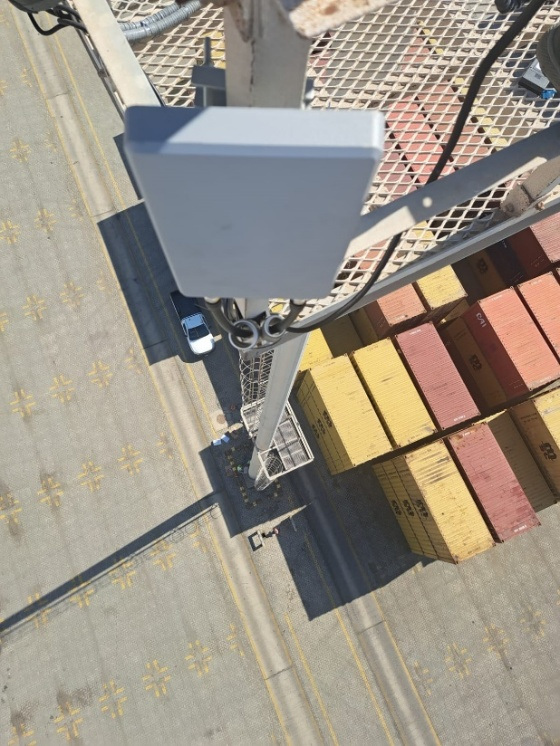
8, two sector APs
on existing light poles — zero new civil works
~80 trucks
moved off metered public cellular
99.999%
availability (five-nines) per the customer SLA
190-acre
terminal covered — no blind spots
Terminal-wide private 5G — no blind spots, no metered data.
_01 The Challenge
- ~80 yard trucks on a public macro network across a 190-acre port
- Spotty coverage — worst where containers stack to max height
- Every byte metered and billed; no network visibility
- Wi-Fi impractical at that AP count; SLA demanded 99.999%
_02 The Solution
- Celona private 5G for the yard-truck fleet
- 8 two-sector APs on existing light poles — no civil works
- Signal reaches trucks even through fully stacked containers
- All traffic private and on-premises
_03 The Outcome
- Final drive test: full coverage, zero blind spots
- Five-nines (99.999%) availability per the customer SLA
- Metered public-carrier data eliminated
- Improved data security and full network visibility
A major U.S. West Coast marine-terminal operator runs container operations across a 190-acre terminal, where a fleet of roughly 80 yard trucks (terminal tractors) constantly moves containers and reports position and status. Those trucks depended on truck-mounted routers riding a public-carrier macro network — and at port scale, that was the weak link.
The problem with public macro cellular
Macro coverage across a container yard is spotty by nature, and it gets worse exactly where the work is densest — signal has to punch through steel containers stacked to maximum height.
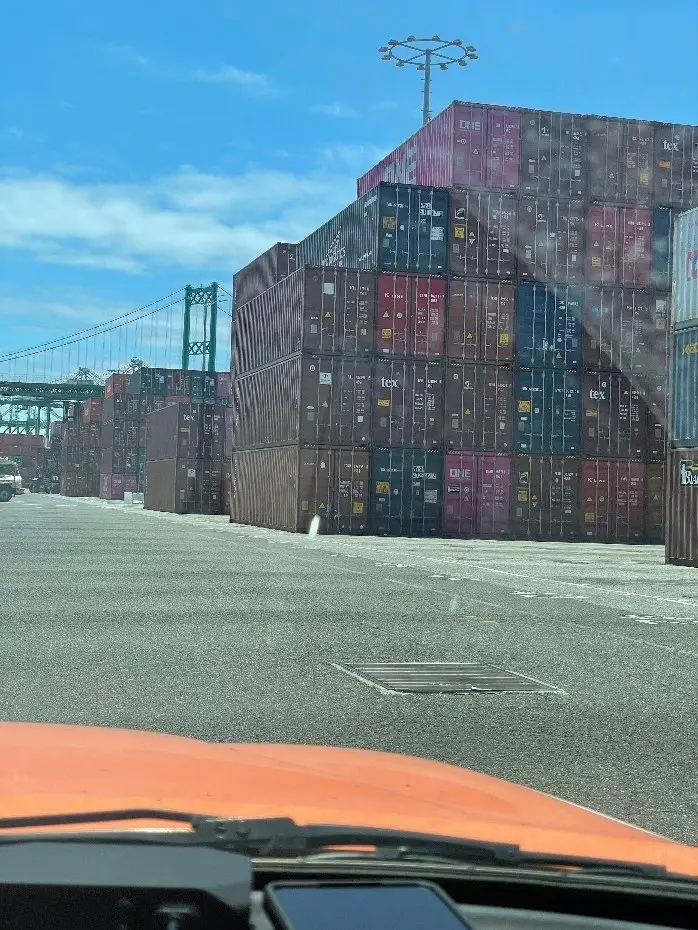
Every byte the fleet sent was metered and billed on a carrier data plan, and because the traffic rode a public network, the operator had no real visibility or control over it. Blanketing 190 acres with Wi-Fi wasn't practical either: the AP count and cabling to cover an open yard at that scale is prohibitive, and Wi-Fi couldn't meet the 99.999% availability the operation demanded.
One private 5G layer on existing light poles
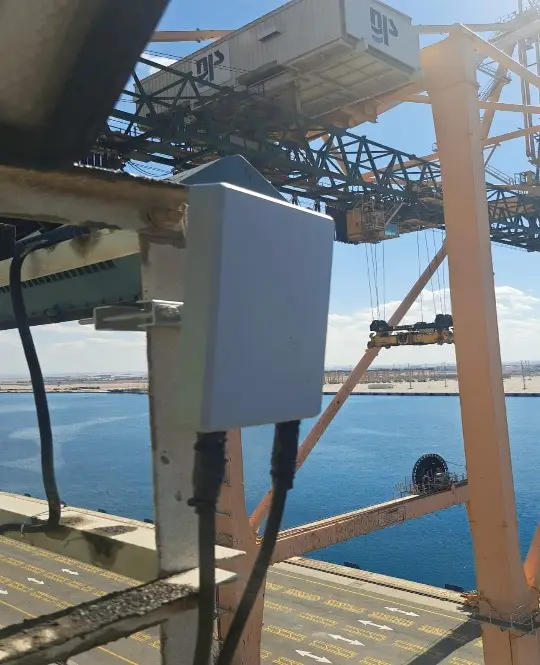
Celona deployed private 5G for the truck fleet: eight access points, each with two sectors, cover the entire terminal. Crucially, they mounted on the port's existing light poles — no trenching, no new towers, no civil works.
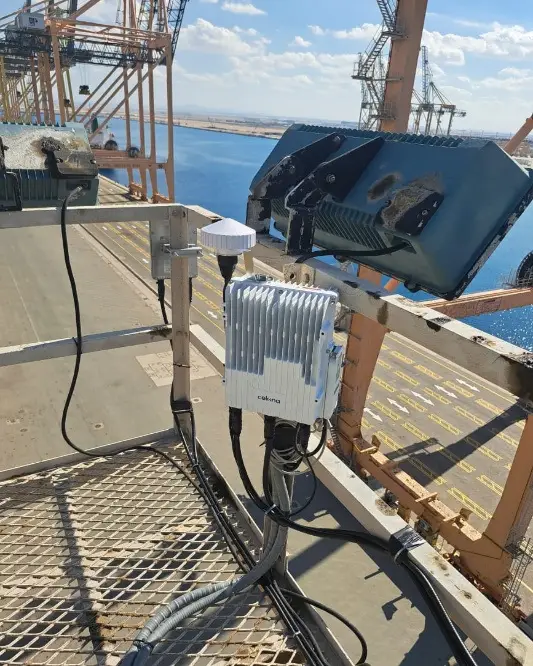
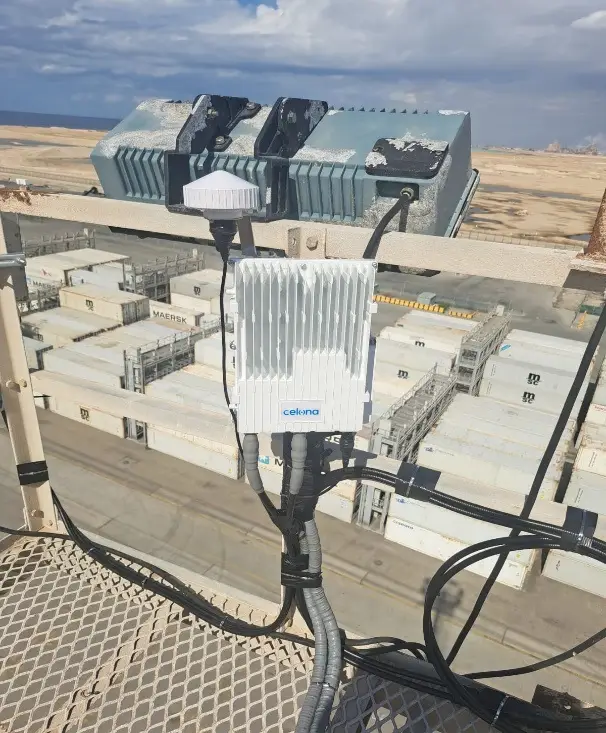
The higher transmit power and cellular link budget of private 5G reach the trucks even deep in stacked-container canyons where Wi-Fi and macro both struggle. All traffic now stays private and on-premises, so the operator finally has full visibility into its own network.
Verified, and built to an SLA
The final drive test across the yard showed full coverage with no blind spots, and the network holds to the customer's 99.999% availability SLA. The metered public-carrier data is gone — replaced by a private network the operator owns and monitors — and moving all traffic on-premises improved data security at the same time.
What it sets up: remote and automated cranes
The same deterministic fabric opens the terminal's next step — moving crane operators out of on-crane cabs into a central control room, where one operator runs multiple RTG cranes across automatic, semi-automatic, and manual-remote modes. Private 5G delivers the wireless equivalent of trenched fiber to every gantry: video under 200 ms, deterministic control-data response between the control center and on-crane PLCs, and per-crane VLAN isolation — all without civil works across the yard.
| At a Glance | |
|---|---|
| Customer | Major West Coast marine-terminal operator |
| Vertical | Ports |
| Facility | 190-acre marine container terminal |
| Location | U.S. West Coast port (name withheld) |
| Spectrum | CBRS / private 5G |
| Solution |
|---|
|
Go deeper
More resources on private wireless for the enterprise.
/ Next step
See what Celona Orion can do for your plant
Talk to the team behind Del Conca's deployment, or take the platform for a spin.