
/ Case Study | Manufacturing
Celona 5G LAN helps global auto maker radically transform manufacturing operations
One of the world's largest luxury automakers utilized Celona 5G LAN to moderize its supply chain using autonomous yard trucks.
1.5 mi2
of private 5G coverage
50+
autonomous yard trucks supported
18
5G access points
10-20 ms
latency for truck control
_01 The Challenge
Reliably connect automated yard trucks to enable just-in-time inventory management and manufacturing.
_02 The Solution
After an extensive site survey and planning, the Celona team installed 18 access points with omni/sectional antennas to provide 5G coverage for the entire property.
_03 The Outcome
- Fully redundant, high availability 5G NR standalone core in active-active operation
- Ubiquitous coverage for massive outdoor parking lot areas
- Uninterrupted mobility for network connected AGVs
- -105 dBm RSRP (or better) signal strength
A service level guarantee from a carrier allowing for 10% dropped calls is not acceptable for mission critical use cases like autonomous trucks.
- Senior Director of Networking, Leading global auto manufacturer
Previously, connecting a security camera required running a quarter mile of fiber and power. Now we can easily and quickly connect them using Celona's 5G LAN system.
One of the world's largest luxury auto makers, with a U.S. manufacturing plant spread out over 1.5 square miles (726 football fields), needed to deploy 20-30 driverless yard trucks to move trailers filled with auto parts from the storage yard to the plant for just-in-time manufacturing.
The problem was no conventional wireless technology could deliver the reliability, coverage, control or deterministic connectivity required to do the job.
"The technical requirements to enable the level of automation required for this auto maker were some of the most stringent we've seen, and simply couldn't be met by existing Wi-Fi technology or public carrier cellular services," said Manan Shah, Director of Sales Engineering at Celona. Manan directed and oversaw the entire private wireless project, adding that "the customer wanted complete control over its destiny, and the ability to maximize massive investments in next generation automation systems. This led them directly to Celona's new 5G NR solution that was precisely engineered for these types of industrial enterprise use cases."
Automatically moving these big trucks throughout the property demanded pervasive coverage with low latency and high throughput wireless communications. Any disruption to wireless connection would stall the trucks, and negatively impact the factory's 24 x 7 operations.
What are autonomous yard trucks?
Driverless yard trucks - often called "hostlers," such as those from companies like ISEE - combine advanced AI, robust engineering and wireless connectivity to automatically move trailers and cargo containers across vast properties, with effectively no human intervention.
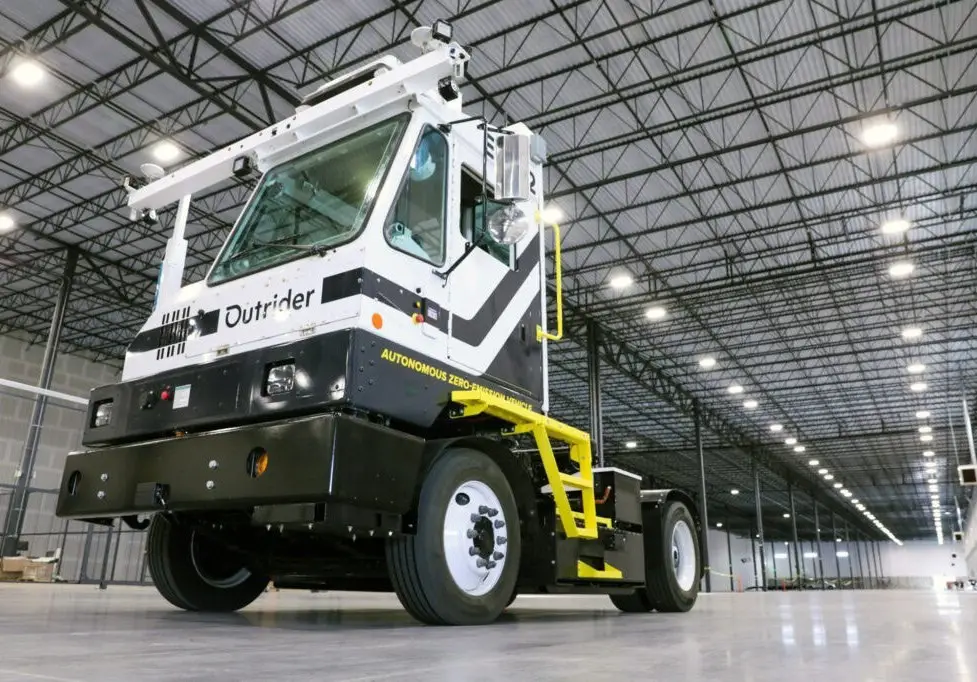
These systems can operate 24x7 and autonomously maneuver into tight spaces. With labor shortages and increasing costs, autonomous yard trucks are becoming commonplace across a wide range of vertical markets such as ports, cross-docking terminals, truck terminals, distribution centers and other cargo yards.
The driverless yard trucks operated by the auto manufacturer were equipped with at least four different HD cameras and LiDAR sensors that stream data and need consistent wireless connectivity to manage safety and efficiency. Each truck requires minimum uplink bandwidth of 25Mbps and a downlink of 5Mbps, with desired latency between 10 and 20 milliseconds to function properly.
As a result, the auto manufacturer was compelled to move to a next-generation private wireless network that could reliably support up to 50 driverless trucks distributed across the property. The alternatives were either prohibitively costly, or simply unable to meet the service level requirements demanded by the various use cases vital to improving operational efficiencies.
Wireless choices
At first, the auto maker tried equipping the trucks with public cellular connectivity from a mobile network operator. However, this presented many challenges. The carrier could neither guarantee the required data throughput and latency, nor the coverage required for the smooth functioning of these autonomous vehicles. And the manufacturer was left with little to no control over how their data was handled by the network.
What's more, the cost of scaling the autonomous truck fleet would be prohibitively expensive. With the public carrier service, the data was metered and billed based on usage, despite the fact that the data was only being used within the manufacturer's private facilities. Additionally, cellular coverage across the vast facilities was inconsistent, leaving the auto manufacturer at the mercy of the MNO's infrastructure that was never designed for this specific use case.
Finally, the auto maker was concerned about data privacy and didn't want proprietary data going through a third-party carrier network. It preferred all company data to securely remain in-house under its complete control.
The manufacturer assessed the cost of Wi-Fi and found that it would be prohibitively expensive to cover their 1.5 square miles of outdoor space with Wi-Fi, even though Wi-Fi worked fine in their carpeted office spaces. This was due to the massive number of access points needed, additional RF design required, and the cost of trenching and providing fiber and power to each access point.
Unable to meet their stringent use case demands with Wi-Fi or public cellular services, the customer turned to deploying a private wireless solution. While the auto maker had no expertise to design/install cellular equipment, they wanted a fully integrated wireless network that could be easily installed, managed and tuned by their IT staff. On the recommendation of their preferred managed service provider (MSP), the auto maker picked the Celona 5G LAN solution to address their needs. The MSP and Celona collaborated closely to deliver a private 5G network fully integrated into the customer's enterprise network, running in record time.
A service level guarantee from a carrier allowing for 10% dropped calls is not acceptable for mission critical use cases like autonomous trucks.
- Senior Director of Networking, leading global auto manufacturer
Private 4G vs private 5G
While private 4G devices/access points are widely available in the United States at a lower cost, the manufacturer chose to build a private 5G network for several reasons that would help future proof their investment:
- A 4G/LTE network would not meet their uplink throughput and latency requirements.
- The manufacturer wanted to standardize on a unified network architecture so they could replicate the setup across their other plants in Europe and Asia. Since Private 5G is being more widely adopted worldwide (vs Private 4G), this was an obvious choice.
- Future applications and use cases, such as high-definition video surveillance would require greater client density and throughput.
Building a highly available private 5G network in a large area
After an extensive site survey and planning, the Celona team installed 18 access points with omni/sectional antennas to provide 5G coverage for the entire property. Redundancy was factored into the design to account for backup in case of access point failure and load balancing. The APs (Access Points) and antennas were installed on the rooftop of the factory building, where the manufacturer was able to provide power and fiber backhaul without the costs associated with trenching across the property.
Three Celona Edge nodes running the Celona Edge OS were installed. These serve as a single Edge Cluster for a Celona private 5G network to support auto scaling and high availability. This eliminates any single point of failure with services automatically load-balanced across nodes for improved optimization of the 5G LAN. Any failure identified on one edge node is also detected by the others, making recovery instant and automatic.
The network ran into several connectivity, hand-over and fiber/power challenges during commissioning. These issues were overcome by optimizing RF channel planning, adjusting handover parameters for each AP based on its location, and re-working the fiber/power patch for optimal performance.
Remarkable results
Celona deployed a private 5G network with 18 5G access points that provided ubiquitous coverage across the 1.5 square mile manufacturing facility to enable the use of 50 or more autonomous yard trucks at a fraction of the cost of other wireless alternatives. The results included:
- Fully redundant, high availability 5G NR standalone core in active-active operation
- Ubiquitous coverage for massive outdoor parking lot areas
- Uninterrupted mobility for network connected AGVs
- -105 dBm RSRP (or better) signal strength to ensure reliable connectivity
- High SINR to meet best possible capacity requirements.
The fully redundant, high availability software core provides active-active edge clusters with automatic fail-over coverage in case of any equipment malfunction. And since all the equipment is local, the manufacturer's data never leaves their premises and the 5G network seamlessly integrates into the customer's existing enterprise network and IT policies.
In addition to the autonomous trucks, the manufacturer now operates 5G-native handheld scanners, ruggedized laptops, printers, push-to-talk communication devices, 5G wireless security cameras, and autonomous robots all operating on the Celona private wireless network.
The auto maker plans to extend the private wireless network inside the factory to support automation and re-configurable assembly lines that traditionally have used wired connectivity schemes.
Previously, connecting a security camera required running a quarter mile of fiber and power. Now we can easily and quickly connect them using Celona's 5G LAN system.
| At a Glance | |
|---|---|
| Vertical | Manufacturing |
| Location | United States |
| Facility | 1.5 square miles (726 football fields) |
| Staff | 20,000 employees, 30+ facilities |
| Solution |
|---|
|
Go deeper
More resources on private wireless for the enterprise.